Leica Q Typ 116 Review
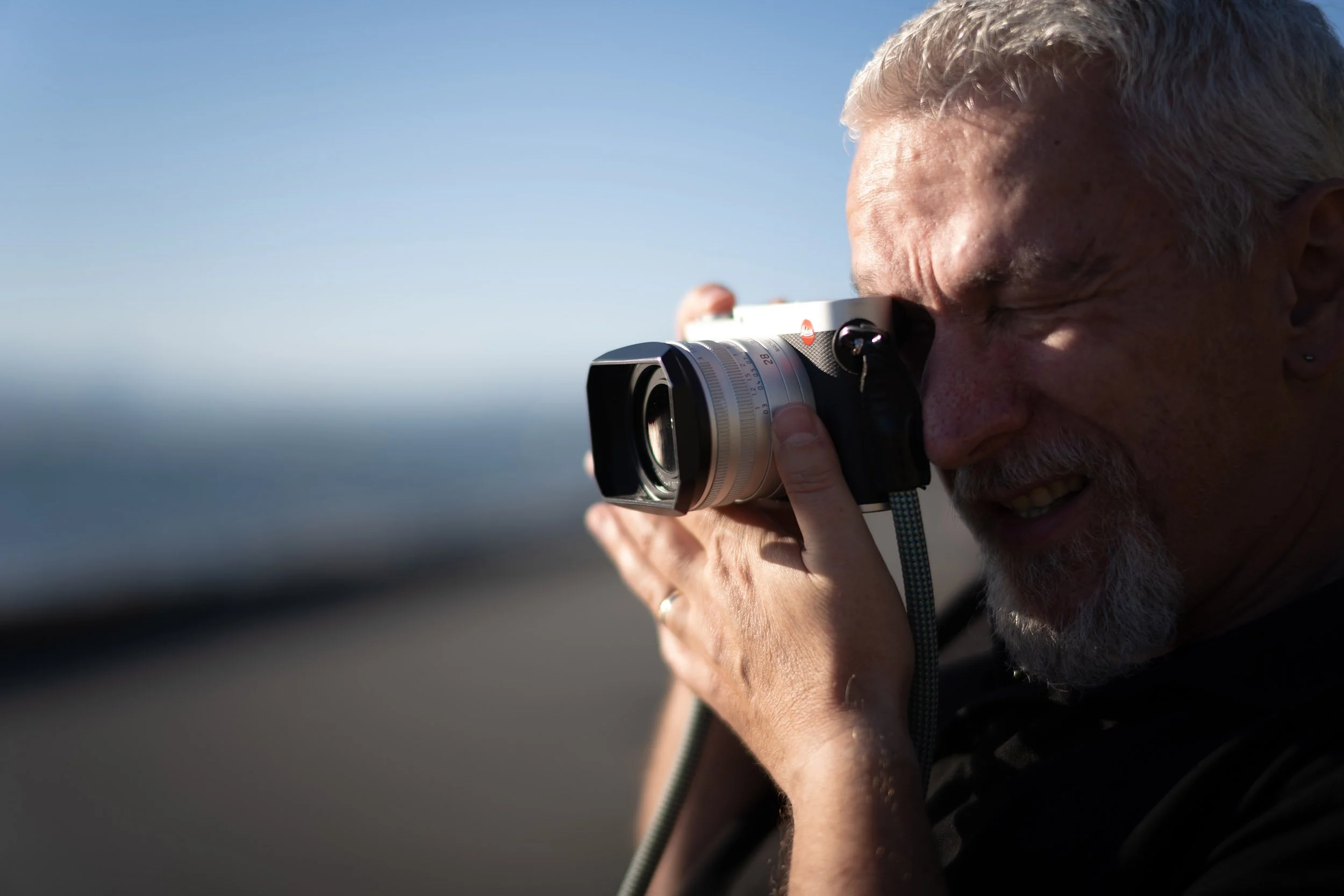
My friend Goran modeling for me with another friend, Julian’s Leica Q Typ 116 (the original 2015 version). It’s good to have friends :)
Leica Q in 2026: Is It Still Good?
Back in 2015, when this site first began, I preordered the Leica Q Typ 116 as we started our travel project to visit 50 countries over 50 months.
When the camera was ready to ship, I got cold feet and had last-minute jitters, since we had just sold our house and were very close to departure. I canceled my preorder and took off with my Canon 5D Mark III, which was later replaced by a Fujifilm kit.
The Leica Q series of cameras, however, has always had my attention, and with the Q2 and later Q3, I have been tempted to jump in several times.
This temptation flared up again a couple of weeks ago, and it dawned on me that I had never really spent much time with the original Leica Q Typ 116.
A friend of mine, Julian, has the Leica Q, and when I asked him to try it out for a few days, he didn’t hesitate. As the photo caption above says, it’s good to have friends.
Commercial Drive, Vancouver, Leica Q Typ 116, Leica Summilux 28mm f/1.7 @ f/8
Worries About Old Tech
The Leica Q Typ 116 was released in 2015, and going into this review, I was somewhat worried about what the old tech would feel like. Over the past eleven years, the user experience has improved with niceties like better EVFs, faster operation, and better dials.
My worries were largely unfounded. Yes, the newer menus in the Q2 and Q3 look cool and are nicer, but the original Q still looks fine, and once the camera is set up, you rarely have to dig into the menus.
My EDC (everyday carry camera), the Fujifilm X-Pro2, is from 2016, so I am no stranger to older cameras. I still enjoy the files from my X-Pro2, and the same goes for the Leica Q Typ 116. As a reviewer, I question how far we’ve really come in the past 10 years. These older cameras still produce wonderful images.
Leica Q Typ 116, silver
Fun Factor
What struck me most about the Leica Q was the fun factor, and I almost immediately felt unburdened and free. At a mere 640 g, including the excellent attached Summilux 28mm f/1.7 lens, the camera is a breeze to carry, and you barely feel it around your neck.
For comparison, the Q2 and Q3 are about 100 g heavier, while a Fujifilm X100VI is about 100 g lighter.
With the Leica Q, I felt liberated from the usual deliberation of which lenses to bring. Do I pick a manual focus or autofocus lens? Should I bring one lens, two, or three?
With the Leica Q, you have to make it work with what you’ve got, and yet there is a calming feeling in knowing that you are carrying a full-frame camera with a fast prime lens, which is capable of delivering excellent results if you are willing to zoom with your feet and get closer to the action if need be.
Jervis and Melville Street, Vancouver, Leica Q Typ 116, Leica Summilux 28mm f/1.7 @ f/1.7
Value Proposition and a Slippery Slope
I saw a few Leica Qs on my local buy-and-sell, with an average price around $2,300.00, which felt reasonable for a Leica with eleven-year-old tech and a 24-megapixel sensor.
However, one camera looked beat up, and if you want a camera in decent shape, prices approach $3,000.00. The Leica Q came in two versions: the Q-P, with a cool matte black look, a Leica inscription on top of the camera, and a nicer shutter button than the original Q, which I tried in this review.
The Q-P looks great, but you can add another $1,000.00 to the above-mentioned price tag, which makes it close to, or equal to, the value of a pre-owned Leica Q2.
Currently, a new Leica Q3 is $7,350.00, and the Q3 43 is $7,950.00. Used Q3 models are harder to find. I found one locally for around $6,100.00, and it appears to be the same price as at MPB.
This means you can jump up quite a few levels if you are in the market for a Leica Q. The trick is figuring out how important a Leica Q would be in your setup or workflow. Will this be your primary camera, a secondary option, will you use it occasionally, or perhaps for travel?
Used Leica Q cameras tend to hold their value quite well. I suspect that if you find a good copy, use it for a while, and take care of it, you can likely sell it for the same price you paid.
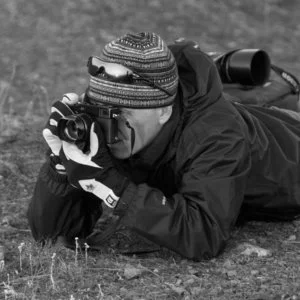
Another friend, Danish photographer Mads Krabbe, with his Leica Q Typ 116 in Cologne, Germany in 2016
Portability
I could see this original Leica Q Typ 116 as a wonderful travel companion. It’s lightweight and won’t take up much room in a travel pack.
As you can see in the first photo below, however, more portable options are available, which shouldn’t surprise you. The Summilux 28mm f/1.7 lens is, after all, bulky compared to a Fujifilm X-E5 with a pancake lens or a Fujifilm X100VI.
In the second photo below, I have compared the Leica Q to my Fujifilm X-Pro2 with a Fujifilm XF 23mm f/1.4 R LM WR lens. I expected the two cameras to be similar, but the Leica Q isn't as wide as the X-Pro2, and with the lenses shown, it's about 200 g lighter. You can check my Fujifilm review here:
Old and new. The Leica Q Typ 116 and Fujifilm X-E5
Size comparison of the Leica Q Typ 116 and Fujifilm X-Pro2 with an XF 23mm f/1.4 R LM WR lens
Image Quality
Overall, I was happy with the Leica Q image quality and wouldn’t have any qualms about taking this on an important trip, even in 2026. My Leica SL2-S was released five years after the Leica Q and has a better sensor with improved dynamic range, but it’s far bulkier and heavier.
As mentioned above, my current EDC camera is the X-Pro2 with the XF 23mm f/1.4, which also delivers excellent results, and I have a hard time choosing between them. The combination of the Q's full-frame sensor and the Summilux 28mm f/1.7 may, however, have an edge in delivering very smooth-looking files.
The 28mm lens on the Q is a tad wider than most 28mm lenses. It’s probably more like a 26mm lens. Please see the two images below for comparison.
Leica SL2-S and Contax Zeiss 28mm f/2.8 T*
Leica Q Typ 116, Leica Summilux 28mm f/1.7 (This photo is a tad wider than the image above from the Contax Zeiss 28mm lens)
Final Thoughts
Leica Q camera keeps eluding me for various reasons, and yet I have been tempted many times; I still am.
Initially, in 2015, the timing wasn't right, and later, when I tested the Leica Q3, I already had the SL2-S with a wonderful Voigtländer 28mm lens and found it hard to set aside the funds for a Q3 without letting go of the SL2-S, which I wasn’t prepared to do.
Here I am a couple of years after the Q3 test, and again, I won’t be picking up a Leica Q Typ 116, despite really liking it. For now, my Fuji cameras fill the role of the Q.
As a reviewer, the Q cameras are a tricky proposition for me, as they are fixed-lens cameras, meaning I cannot review them with several lenses as I usually would with other cameras.
Picking cameras is different for everyone and I view the Q as a camera I would love to have in retirement, if I ever retire.
Waterfront Station, Vancouver, Leica Q Typ 116, Leica Summilux 28mm f/1.7 @ f/5.6
Don't let my situation keep you from exploring a Leica Q Typ 116 camera. It may just be what fits in your kit, and I hope my sample images and write-up help you decide.
Unless you plan to crop your images extensively, the original Leica Q has very pleasing image quality and stacks up nicely against the Q2 and Q3.
Looking through my sample images from the Q3, I think it has something special to offer, but I haven't tried the Q2 yet.
Keep in mind, at a significantly lower cost than a Q2 or Q3, you’d still get the wonderful Summilux 28mm f/1.7 lens in the original Leica Q Typ 116 camera, with a 24-megapixel sensor that yields pleasing rendering and enough resolution for most uses.
English Bay Beach, Vancouver, Leica Q Typ 116, Leica Summilux 28mm f/1.7 @ f/8
In closing, and setting specs aside, I come back to the freedom feeling of using this Leica Q Typ 116. The freedom of not having a camera that physically weighs you down, the freedom from having to choose lenses, the luxury of pairing a Summilux lens custom-fitted to the camera, and a full-frame sensor.
If any of these attributes appeal to you, the answer to my lead-in paragraph is yes: the Leica Q Type 116 is still good, even in 2026, and I encourage you to check it out if you get the chance.
Thanks again, Julian, for helping out with this review and for lending me your Leica Q. You can check out Julian’s work here:
Please see more sample images below.
Price / Availability
Thank you for reading my review. If you are planning a purchase and want to support us, you can do so at no extra cost by using the affiliate links below. A small commission goes to us, helping us keep the wheels turning at 5050 Travelog.
Check the current price at B&H Photo
Thank you for being supportive.
Leica Q Typ 116 Sample Images
Please see the sample images below. I edited these in Lightroom, and I slightly cropped some images.
Please click to view larger images.
Commercial Drive, Vancouver, Leica Q Typ 116, Leica Summilux 28mm f/1.7 @ f/2.8
Commercial Drive, Vancouver, Leica Q Typ 116, Leica Summilux 28mm f/1.7 @ f/5.6
Commercial Drive, Vancouver, Leica Q Typ 116, Leica Summilux 28mm f/1.7 @ f/5.6 (Hint, I can recommend the Greg Girard photo exhibition, and it is still on until October 25, 2026, at Polygon in North Vancouver, poster on the right in this photo)
Commercial Drive, Vancouver, Leica Q Typ 116, Leica Summilux 28mm f/1.7 @ f/2.8
East Vancouver, Leica Q Typ 116, Leica Summilux 28mm f/1.7 @ f/5.6
West End, Vancouver, Leica Q Typ 116, Leica Summilux 28mm f/1.7 @ f/1.7
West End, Vancouver, Leica Q Typ 116, Leica Summilux 28mm f/1.7 @ f/2.8 (Macro Mode)
Stanley Park, Vancouver, Leica Q Typ 116, Leica Summilux 28mm f/1.7 @ f/2.8
Near Kingsway, Vancouver, Leica Q Typ 116, Leica Summilux 28mm f/1.7 @ f/5.6
Kingsway, Vancouver, Leica Q Typ 116, Leica Summilux 28mm f/1.7 @ f/4
Kingsway, Vancouver, Leica Q Typ 116, Leica Summilux 28mm f/1.7 @ f/4 (Macro mode)
Kingsway, Vancouver, Leica Q Typ 116, Leica Summilux 28mm f/1.7 @ f/2
Kingsway, Vancouver, Leica Q Typ 116, Leica Summilux 28mm f/1.7 @ f/8
Vancouver, Leica Q Typ 116, Leica Summilux 28mm f/1.7 @ f/1.7